Lead follow-up automation means every new lead gets an instant reply, is asked a few qualifying questions, and is handed to the right salesperson while they're still interested, without anyone watching the inbox at 11pm. It solves the most common sales problem in small businesses: leads that go cold because nobody replied fast enough.
The best automations feel personal. They answer quickly, ask only what's needed, and get a human involved at the right moment.
Why does speed matter so much?
Because interest fades fast. When Harvard Business Review audited how 2,241 US companies responded to web leads, it found:
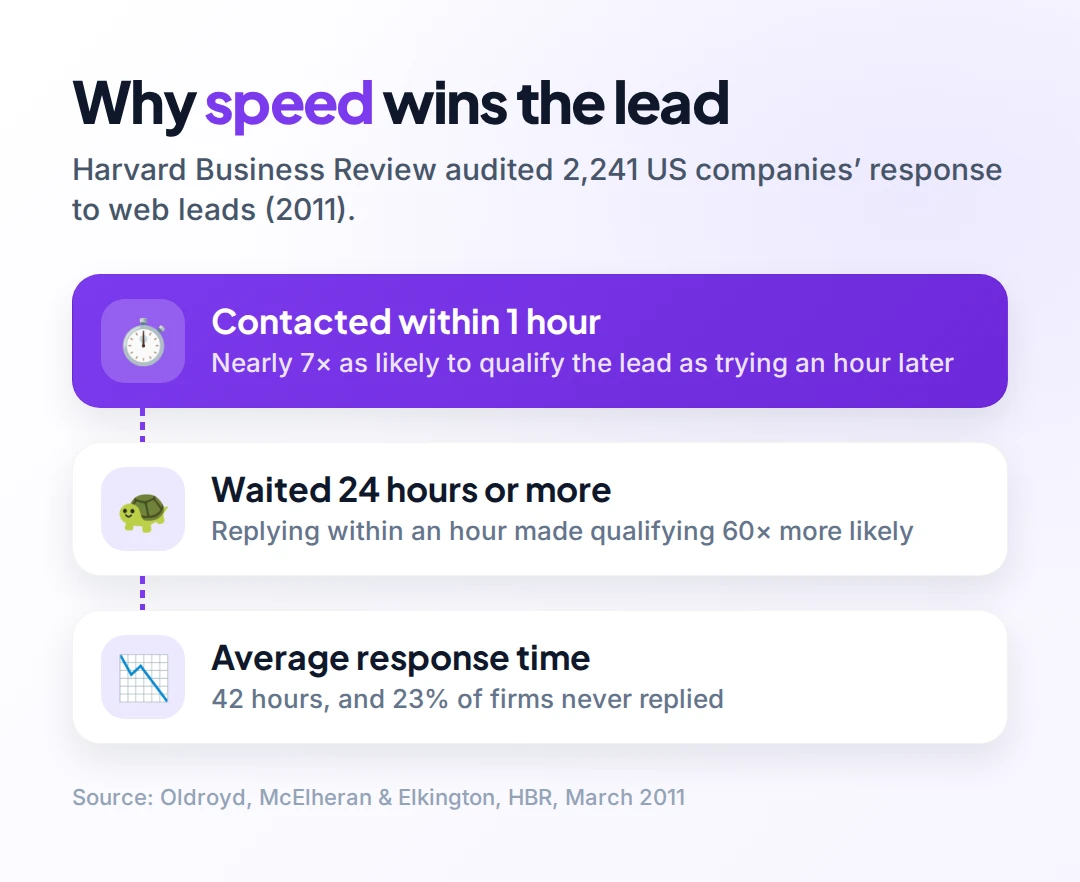
- Firms that contacted a lead within an hour were nearly 7 times as likely to qualify it as firms that tried even an hour later.
- They were more than 60 times as likely to qualify it as firms that waited 24 hours or longer.
- The average response time was 42 hours, and 23% of companies never responded at all.
Source: Oldroyd, McElheran and Elkington, The Short Life of Online Sales Leads, HBR, March 2011.
The study is from 2011, but the lesson has only grown stronger as buyers compare more options on their phones. The business that answers first, with something useful, usually gets the conversation.
What lead follow-up automation does
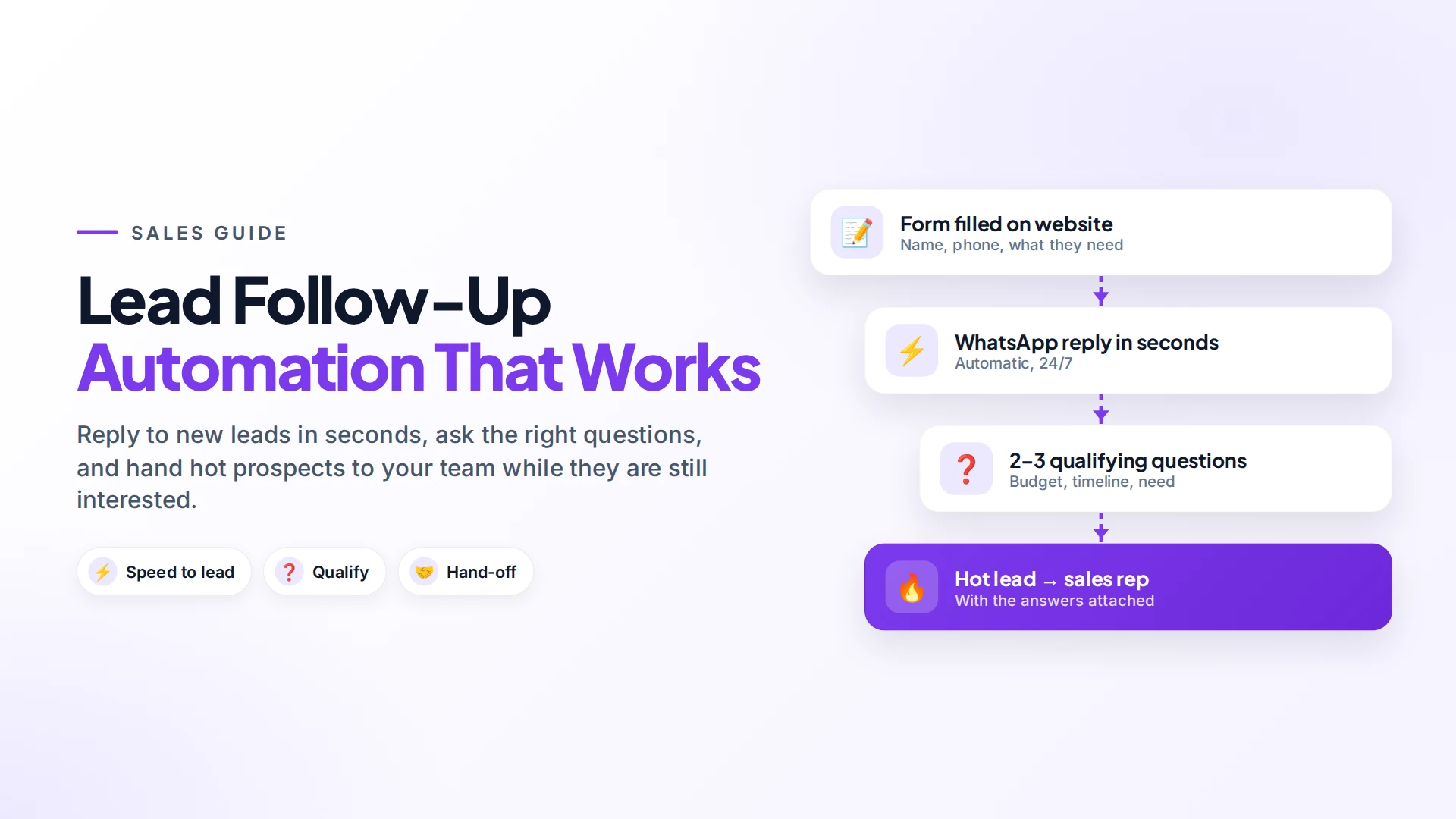
A good setup handles the first five minutes of every lead:
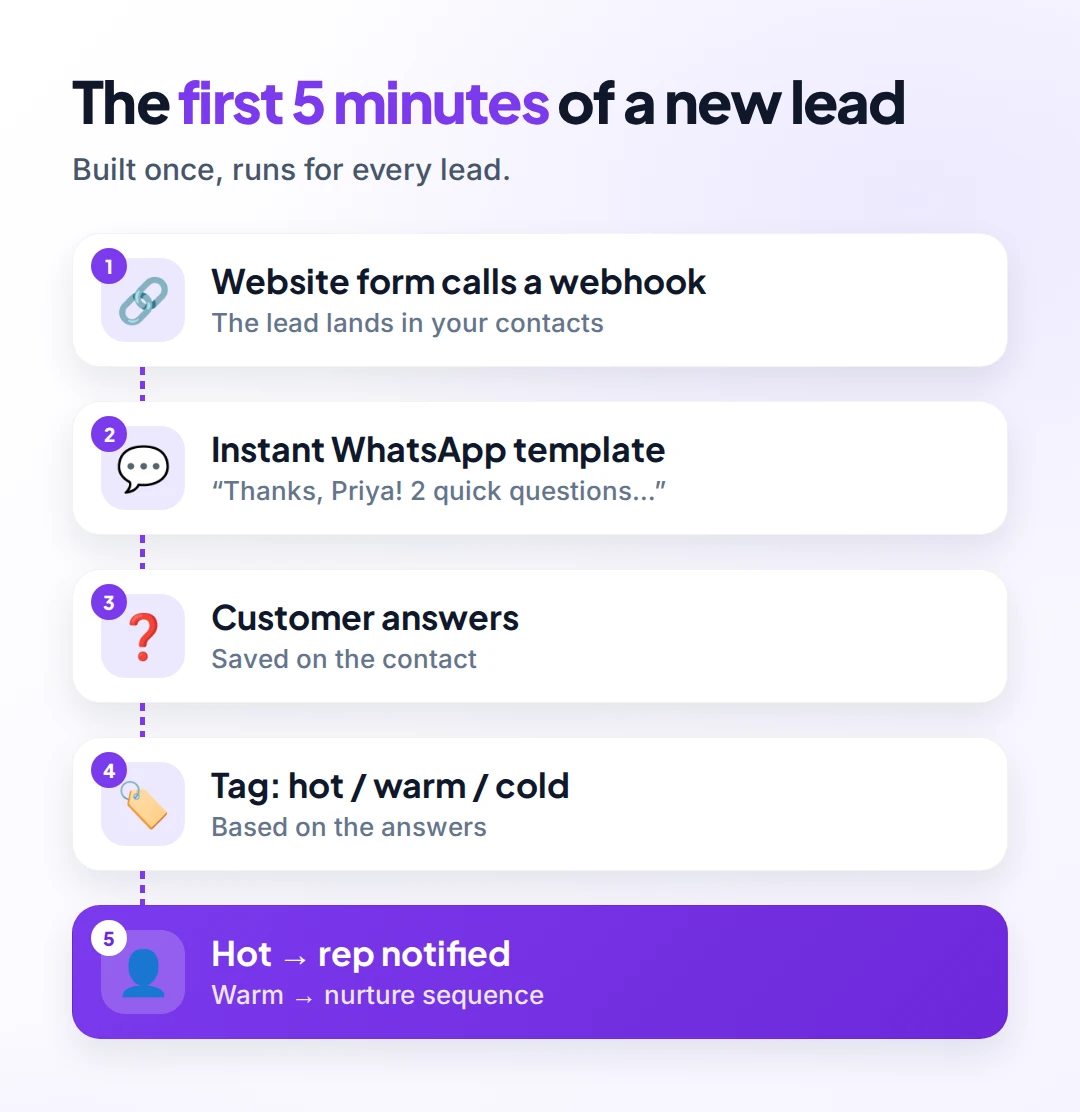
- The lead arrives. From a website form, a Click-to-WhatsApp ad or an Instagram DM.
- An instant reply goes out. On WhatsApp, this is a template message, because you're writing first. It thanks them by name and asks if they have two minutes.
- Two or three qualifying questions. What they need, their budget range and their timeline, ideally as tap-to-answer buttons.
- The lead is tagged. Hot, warm or cold, based on the answers.
- The right next step happens. Hot leads go straight to a salesperson with the answers attached. Warm leads get a short nurture sequence. Cold leads get a polite "we're here when you're ready".
The questions to ask (and not ask)
Ask only what changes what happens next. For most businesses that's:
| Question | Why it matters |
|---|---|
| What are you looking for? | Routes the lead to the right person or product |
| What's your budget range? | Separates serious buyers from browsers |
| When do you need it? | Tells you how urgent the follow-up is |
Skip anything you could look up later, like company size or how they heard about you. Every extra question loses people.
Example messages
Instant reply (template):
Hi {{name}}, thanks for your enquiry about {{product}}! 👋 I'm {{business}}'s assistant. Could I ask 2 quick questions so the right person can help you? Buttons: Sure · Call me instead
Hand-off message:
Thanks, {{name}}! {{rep_name}} from our team will message you within the next 15 minutes.
Then make sure that's true. Automation that promises a fast reply and then goes silent is worse than no automation.
Common mistakes
- Automating the whole sale. Automation should qualify and route. Closing is a human job.
- Too many questions. Three is plenty.
- No opt-in for later messages. Answering an enquiry is fine. Adding someone to your promotions list needs their permission (Meta opt-in guidance).
- No owner for hot leads. Decide who gets notified and how fast they must reply.
- Never checking results. Look at which questions people drop off at, and fix them.
WhatsApp, SMS or email for follow-up?
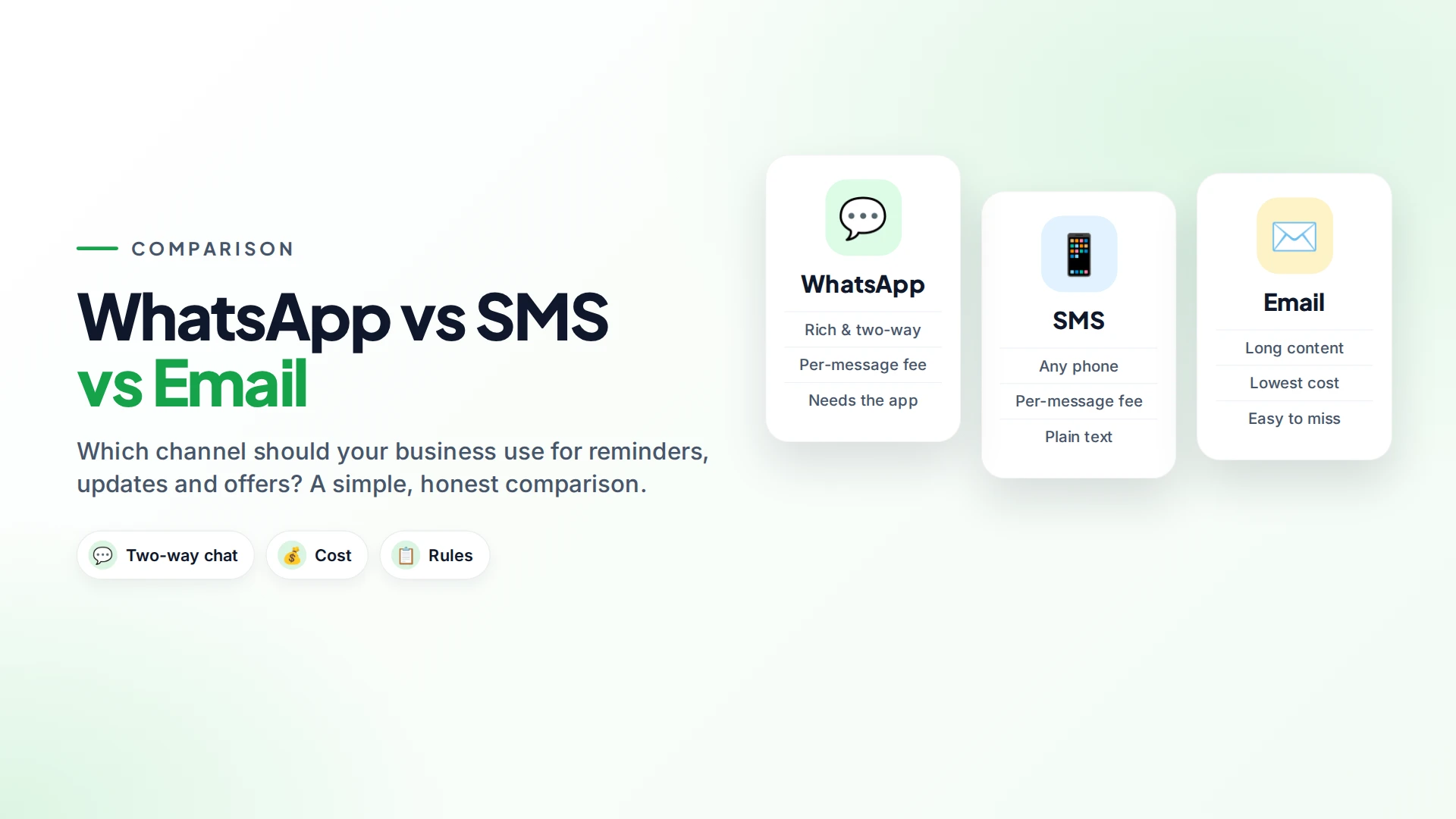
WhatsApp usually gets the fastest two-way conversation, and it supports buttons. Email works well for detailed quotes. SMS reaches people without WhatsApp. Many businesses reply on WhatsApp first and send the formal quote by email. See WhatsApp vs SMS vs email for a full comparison.
Setting it up with Omni
In Omni, you create an automation with a Webhook received trigger and paste its private URL into your website form or form tool. Every submission then starts the flow. The automation builder has send-template steps, button messages, questions that wait for the lead's reply, tags, conditions and assignment to a teammate. You can describe the flow in plain English and get an AI-drafted first version to review.
Leads from Instagram and Facebook Messenger arrive in the same team inbox. The lead pipeline can start automations when a lead moves to Qualified, Won or Lost.
For industry examples, see WhatsApp for real estate and WhatsApp for travel agencies.
Sources
Frequently asked questions
What is speed to lead?
Speed to lead is how quickly you respond after someone enquires. Research such as Harvard Business Review's 2011 lead audit found that responding within an hour makes you far more likely to qualify the lead.
Can I automate lead follow-up on WhatsApp?
Yes, on the WhatsApp Business Platform. The first message to a new lead must be an approved template, and the lead should have agreed to be contacted, for example by submitting your form with a WhatsApp opt-in.
How many questions should a qualifying flow ask?
Usually two or three: what they need, their budget and their timeline. More questions reduce the number of people who finish.
Does lead follow-up automation replace salespeople?
No. It handles the first minutes (the reply, the questions and the routing) so salespeople spend their time on leads that are ready to talk.
What should happen to leads that aren't ready to buy?
Tag them as warm or cold, send a short, useful follow-up, and keep them on a list for relevant updates if they opted in.
- #lead follow-up
- #speed to lead
- #sales automation
- #whatsapp automation
- #lead qualification
The Omni Team
The Omni team builds the shared inbox, AI chatbots and automation tools businesses use to talk to customers on WhatsApp, Instagram and Messenger.
Put this into practice with Omni
One inbox for WhatsApp, Instagram and Messenger, with AI chatbots, campaigns and automation. Start on the free plan.